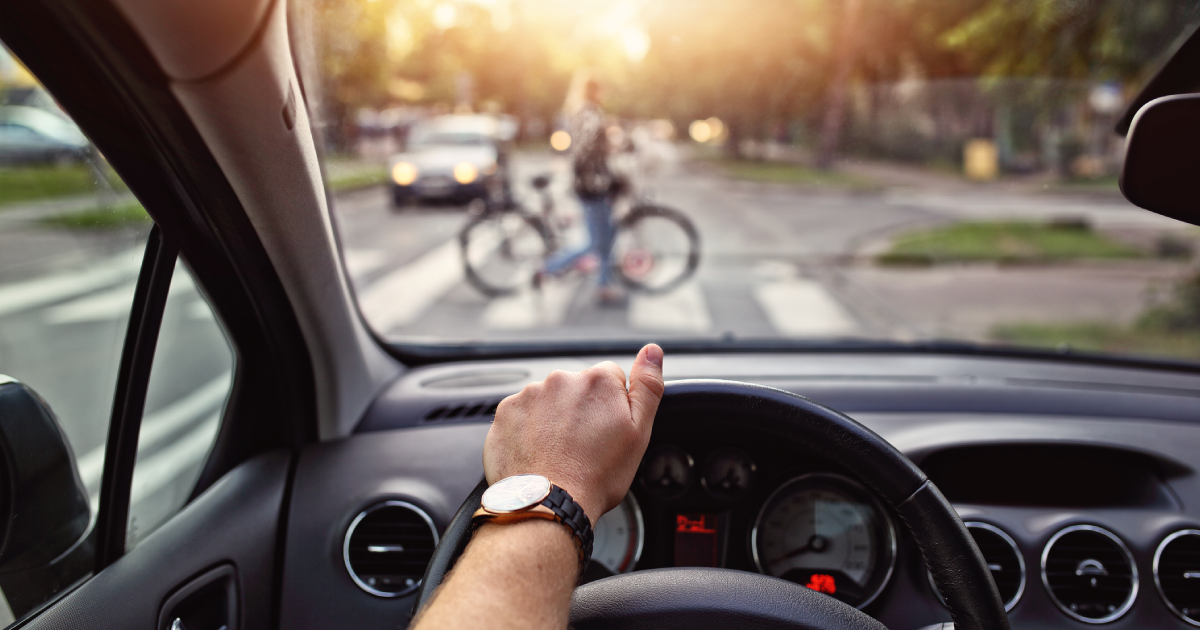
Driving requires doing a variety of tasks at once including watching for oncoming traffic, checking mirrors, using signals, and staying aware of pedestrians and cyclists.
Intersections are especially demanding of a driver’s focus and attention. There is a higher risk of missing a cyclist or pedestrian in a vehicle’s blind spots. Experienced drivers know that taking extra time to slowdown at an increased distance and carefully watching for turning vehicles, pedestrians, and cyclists is necessary at any age.
Cyclists are required to follow traffic laws but they can still be somewhat unpredictable for drivers at intersections. Pedestrians at crosswalks are also at risk during low visibility conditions like at dawn and dusk if they’re not wearing high visibility clothing.
Adapting driving habits: Being aware of situational awareness is key to sharing the road.
- Use extra caution and slow down early at intersections.
- Choose routes that are familiar, well-lit, and ideally, lightly traveled.
- Use high beams when it gets dark and no one is in front of or approaching the vehicle.
- Make intentional efforts to use the turn signal early and often.
- Keep headlights, taillights, the windshield and windows clean inside and out.
- Adjust mirrors and seats before hitting the road to optimize visibility.
- Avoid driving in the rain, at night, during dawn or dusk, and during rush hour times.
Technology
Every day new advances in vehicle technology improves the way drivers commute. Blind Spot Monitoring, Adaptive Headlights, and LaneKeeping Assistance can help add an extra layer of protection on top of regular awareness and focus. Although these tools are helpful they are not are placement for an experienced and attentive driver. Drivers should consult their owner’s manual or contact their dealership to see if their vehicle has any of the following features.
Blind Spot Monitoring
Most cars have as many as four blind spots depending on the vehicle make and model. Some newer cars have a blind spot warning system. It uses sensors to detect when other vehicles are in a vehicle’s blind zone and will alert drivers with a light, a beep, or a vibration.
These tools are helpful, but they’re not foolproof. Drivers should always check vehicle mirrors, signal early, and stay aware of their surroundings. Drivers are encouraged to review their vehicle’s user manual to better understand how their car’s blind spot detection system works.
Adaptive Headlights
Adaptive headlights are designed to improve visibility by pivoting in the direction a driver is steering, helping them spot obstacles sooner and navigate turns with greater confidence. These headlights adjust automatically based on vehicle speed and driver steering, but they’re not a replacement for staying alert. Always scan the road ahead and be ready for unexpected conditions.
Lane Keeping Assistance
Lane keeping assistance technology is another helpful tool to keep drivers safe on the road during their daily commute. Lane drifting can happen when a driver is fatigued, distracted, or incapacitated. This helpful tool uses cameras on the vehicle to monitor its lane position and gently steers the vehicle back toward the center of the lane if it drifts too close to the edges. This tool is not a substitute for careful driving and paying attention when behind the wheel. Nor is it foolproof; the technology requires clear lane markings to be effective. Lane Keeping Assistance technology can help drivers feel more confident behind the wheel and centered in their lane when used appropriately.
Automatic Emergency Braking
Automatic emergency braking adds an extra layer of protection, using sensors to detect the distance between a driver and another vehicle and the potential for a collision. It can automatically apply the brakes if the driver doesn’t react in time for an emergency stop.
In the moment, the vehicle will detect a possible collision ahead of time using sensors, warning drivers to hit the brakes early, and automatically apply pressure to the brakes if the driver doesn’t respond to the warning alerts.
We can all enjoy our mobile independence on the road with a little extra care. With a few updated habits and an understanding of the tools available, older drivers can confidently share the road with pedestrians and cyclists.
FAQ
How can I adapt my driving while my vision is changing? Regular vision check-ups are important to schedule and maintain at any age. But some things drivers can do now is slow down and increase stopping distance. Take extra caution approaching intersections, stoplights, and crosswalks. Double check for pedestrians and cyclists before turning. Drivers should use vehicle turning signals in advance to give other drivers plenty of time to anticipate their movements.
Can I keep driving if my vision changes? Yes, it’s important for drivers to keep up with regular vision check-ups with a doctor and follow vision requirements as outlined by the Virginia Department of Motor Vehicles. Drivers are encouraged to consider taking a driving assessment and to check out CarFit to make sure their vehicle meets their needs.
What is Blind Spot Monitoring technology? Some newer cars have a blind spot monitoring system. It uses sensors to detect when other vehicles are in a vehicle’s blind zone and will alert drivers with alight, a beep, or a vibration if the driver is moving lanes, backing up, or parking and is too close to an object or person within the vehicle’s blindspot.
How do Adaptive Headlights work? Adaptive headlights are designed to improve visibility in the dark by pivoting vehicle lights in the direction a driver is steering their vehicle’s wheel, helping them spot obstacles sooner and navigate turns with greater confidence.
How does Lane Keeping Technology work? Lane keeping assistance uses cameras on the vehicle to monitor a car’s lane position and gently steers the vehicle back toward the center of the lane if it drifts too close to the edges.
What is Automatic Emergency Braking? Automatic emergency braking technology uses sensors to detect the distance between drivers and another vehicle and the potential for a collision. It can automatically apply the brakes if the driver doesn’t react in time for an emergency stop.